Building Meaningful Learning Through Peer Assessment: Insights from International Trainings
3/23/2026
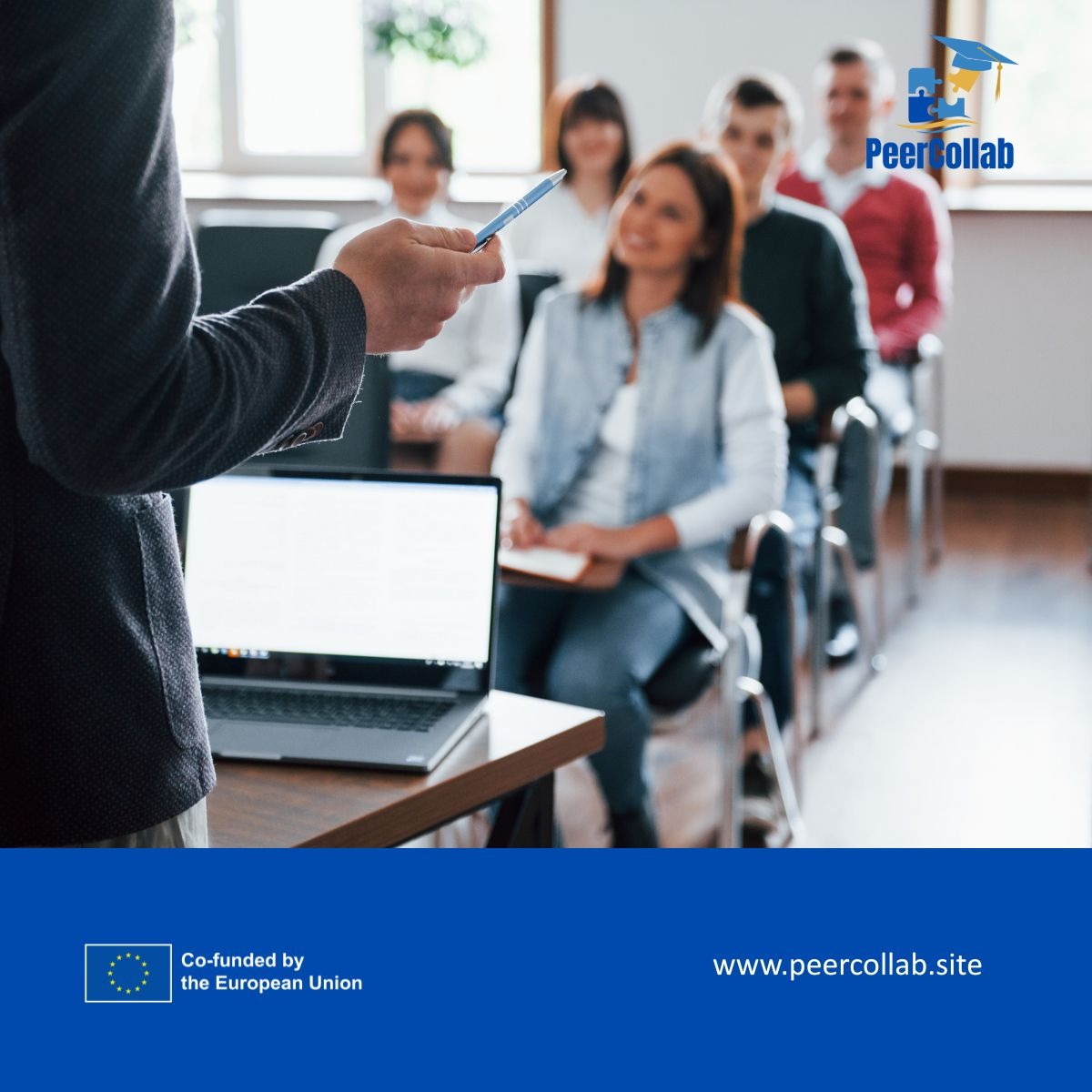
Educators from Poland, Italy, and Spain came together within the PeerCollab Erasmus+ project to explore innovative approaches to teaching and learning. A central focus of these trainings was peer assessment — a method that, when thoughtfully designed, can significantly enhance student engagement, responsibility, and learning outcomes.
Each training took place in a different national context, but their structure and core content remained consistent. Participants experienced a blend of theoretical input, practical examples, and hands-on activities, all aimed at understanding how peer assessment can be effectively integrated into higher education.
Moving Beyond Grading
One of the key ideas emphasized during the trainings was that peer assessment is much more than assigning grades. It is primarily a learning process that supports reflection, critical thinking, and the development of feedback skills. Rather than focusing solely on evaluation, participants were encouraged to see peer assessment as a tool that strengthens the learning journey itself.
This shift in perspective was particularly important for many educators who initially associated peer assessment with simple peer grading. Through discussions and examples, they discovered how structured feedback, clear criteria, and opportunities for revision can transform peer assessment into a powerful pedagogical strategy.
Three Key Moments in the Learning Process
A major takeaway from the trainings was the idea that peer assessment can be useful for different stages of the learning process:
At the beginning (diagnostic) – to identify students’ prior knowledge and needs (at this stage we therefore identify where where we start)
During the course (formative) – to support ongoing learning and improvement (at this stage we therefore identify where where we can get to)
At the end (summative) – to contribute to final evaluation
Among these, the formative stage received particular attention. Participants learned that providing students with clear criteria, time for reflection, and opportunities to improve their work are essential for making peer assessment truly effective.
The Power of Feedback
Another important theme was the role of feedback. Effective peer assessment relies on feedback that is specific, constructive, and focused on the task rather than the individual. Participants explored different formats, including rubrics, checklists, and guided questions, all designed to support meaningful feedback exchange.
Interestingly, discussions also highlighted the importance of anonymity in certain contexts. While not always necessary, anonymity can encourage more honest and open feedback, especially in environments where students may feel uncomfortable assessing their peers directly.
Practical Tools and Flexible Approaches
Across all trainings, participants were introduced to a wide range of practical tools and scenarios. These included:
Simple checklists for quick feedback
Detailed rubrics with clear performance levels
“Feedback scripts” combining evaluation, comments, and guiding questions
Reflective learning journals supporting self-regulation
Importantly, the trainings emphasized flexibility. Educators were encouraged to adapt tools to their specific teaching context — whether in face-to-face or online settings, individual or group work, and across different disciplines.
Learning Across Cultures
The international nature of the project added valuable depth to the experience. While the core principles of peer assessment were shared, participants also reflected on cultural differences in how feedback is given and received. For example, varying attitudes toward direct criticism or group responsibility influenced how peer assessment was perceived and practiced.
These insights reinforced the idea that successful implementation requires not only good tools, but also sensitivity to context and student expectations.
Looking Ahead
The trainings demonstrated that peer assessment, when implemented thoughtfully, can foster deeper learning, collaboration, and accountability. Participants left with practical resources, but also with a renewed understanding of teaching as a process that actively involves students in evaluating and improving their own work.
As the PeerCollab project continues, these shared experiences from the partner countries form a strong foundation for further development and dissemination of innovative teaching practices across Europe.
The project “PeerCollab” is co-funded by the Erasmus+ Programme of the European Union. The views expressed in the working papers, deliverables and reports are those of the project consortium partners. These views have not been adopted or approved by the Commission and should not be relied upon as a statement of the Commission’s or its services’ views. The European Commission does not guarantee the accuracy of the data included in the working papers and reports, nor does it accept responsibility for any use made thereof.
© 2025. All rights reserved.


Follow us
Keep in Touch
Project Number: 2024-1-ES01-KA220-HED-000254336